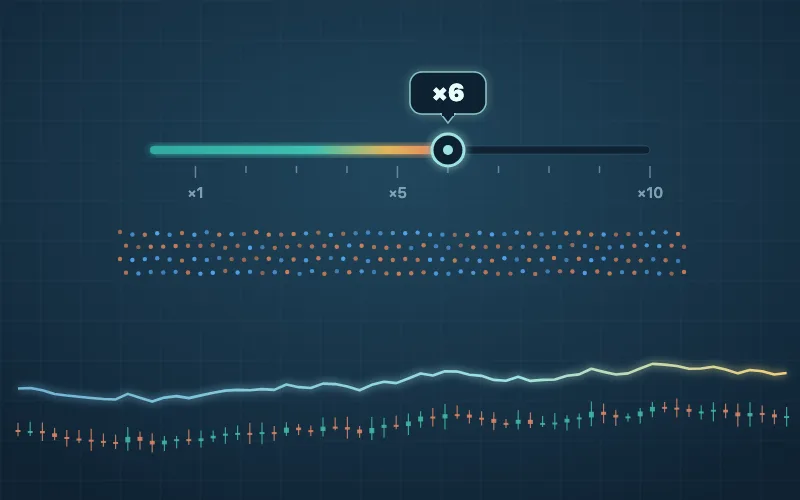
We have changed the default for two strategies: Wolf and Mole now start with a trading bot risk multiplier of ×6 instead of ×1. Lion and Owl stay as they were. Below we explain why this step makes sense for these strategies and what it means for your account.
What has changed
The risk multiplier sets how much of your deposit a trading bot uses in a single trade. The default used to be ×1, and most users kept it. For Wolf and Mole that is too cautious: at ×1 each trade is so small that a noticeable part of the deposit simply sits idle.
When you connect Wolf or Mole, or press "Reset to default", the multiplier is now ×6. You can still change it for each trading bot from ×0.1 to ×10, including in bulk.
Why it is a measured risk for Wolf and Mole
Many bots, small trades. Wolf has 178 trading bots and Mole has 184, both running on 46 pairs and four timeframes. The deposit is spread across all of them, so every single trade is very small. No one position decides the fate of the account.
We win on numbers, not on one lucky trade. These strategies earn through a large number of small winning trades. Since May 10, 2026, Wolf has closed 3,689 trades, 77.7% of them profitable, and Mole has closed 5,463 trades, 83.8% profitable (statistics at ×1).
The AI filter holds back in a dangerous market. Before every entry, the model checks whether the market confirms the signal. When the market is in a dangerous state, the model blocks entries across the board, so the strategy does not pile into dozens of positions at the wrong moment.
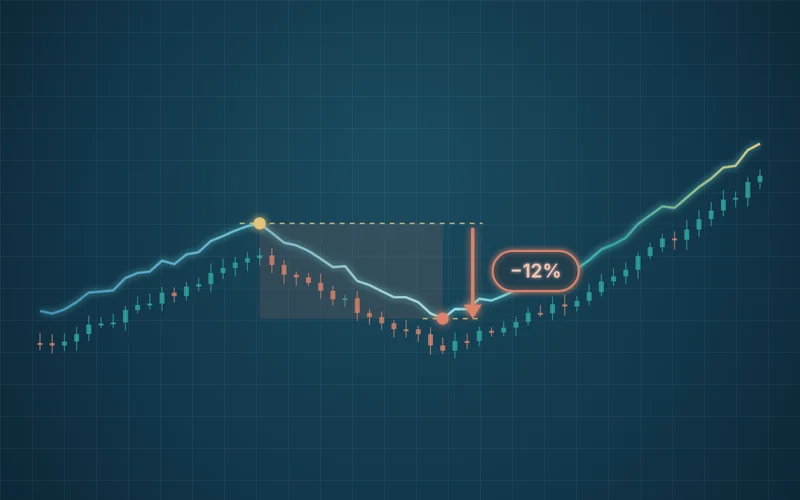
The result is low unrealized drawdown. Small trades and a cap on mass entries keep the unrealized loss (uPnL) low. At ×1, the maximum drawdown including open positions was −5.9% for Wolf and −4.7% for Mole. That margin is what allows a higher multiplier: for these strategies we consider ×6 a moderate, justified level of risk.
What it means for your account
The multiplier scales trades as a whole: along with position size, both profit and drawdown grow proportionally. So read the ×1 statistics with your chosen multiplier in mind. Past results never repeat exactly, and the market can behave differently from any past period.
If you prefer a calmer pace, you can easily lower the multiplier in your trading bot settings, for example to ×2-×3. The easiest way is the Risk block on the strategy page.
If you are already connected
If you have already set the risk yourself, your settings do not change. The new default applies to new connections and when you reset the risk to default.
Important to remember
Strategy statistics are calculated on historical Binance candles net of exchange fees, on a fixed deposit with a ×1 multiplier. Real trades are executed with slippage and funding. Current figures are always on the strategies page, more about the model in AI models of Wolf and Mole, and more about risks in Responsibility.