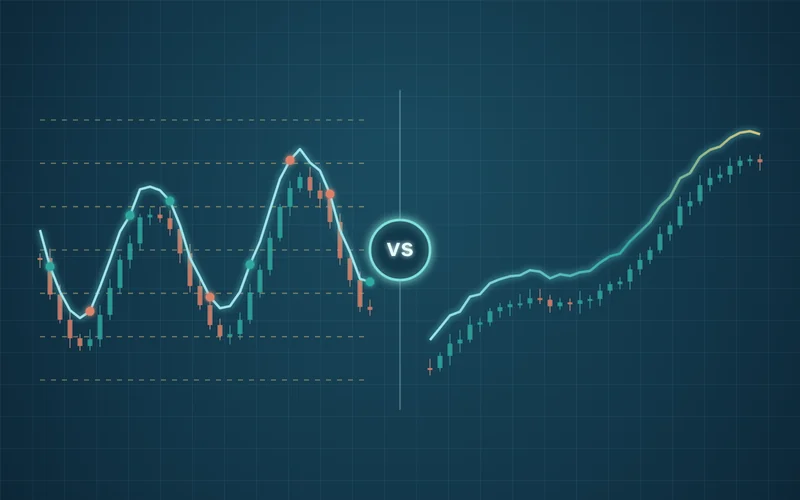

When you connect a strategy with 40+ pairs the first question is whether to switch them all on. The second question, a month later, is why the account held thirty open positions during one bad night. Both come from the same place: the number of pairs is a risk setting, not a convenience.
What more pairs give you
- More trades. A one-pair bot may wait days for its setup; forty bots on forty pairs produce signals almost every day. The equity curve becomes smoother because it is an average of many small results.
- Less dependence on one coin. One pair can be delisted, pumped, halted or simply stop behaving as the strategy expects. Across forty pairs that is noise.
- Statistics that mean something. A hundred trades on one pair is a thin sample; a thousand across a set is a track record.
What more pairs cost you
- Correlation in a crash. Altcoins move together when Bitcoin drops. Forty long grids opened on a Tuesday evening will all be underwater on Wednesday morning. Diversification across pairs does not protect against a market-wide move; only the strategy's stops and the short side do.
- Margin. Every open position locks margin, in hedge mode each side separately. With many pairs, the question is not the risk per trade but the sum of open entries on a volatile day.
- Fees and funding. More positions, more exchange fees and more funding intervals crossed. Both are already inside the strategy statistics, but they scale with the number of open positions.
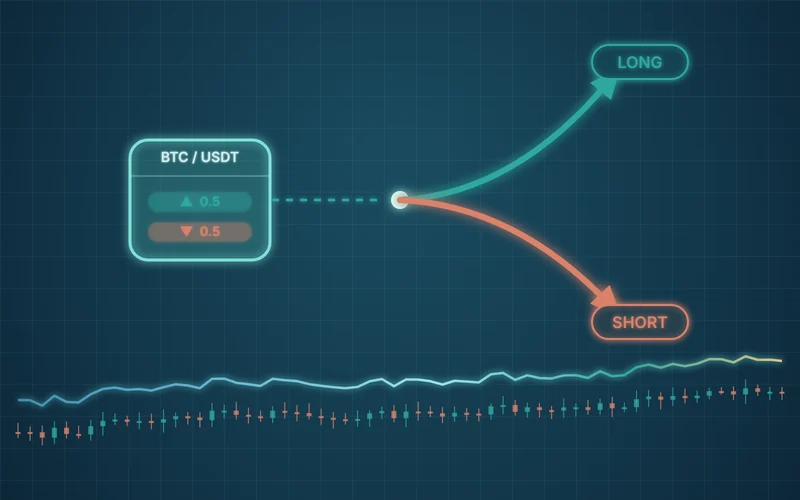
- Minimum order size. On a small deposit, 40 pairs at 0.5% each give orders below the exchange minimum on many pairs, and the bot skips them. A smaller set with a higher multiplier trades properly.
A rule of thumb
Take the deposit, decide the share you are willing to have open at the same time in the worst case (say 30%), and divide by the risk per entry of the strategy times your multiplier times the number of levels a grid can open. The result is the number of pairs the account can carry. For a 2,000 USDT deposit, 0.5% per entry, multiplier x1 and up to 4 levels, that is 30% / (0.5% × 4) = 15 pairs.
Which pairs
The strategy pages show the result of every pair over the whole history, with drawdowns, and let you add pairs to the chart one by one. Three honest filters:
- Liquidity. Prefer pairs with deep order books; the backtest assumes fills near the candle price, which thin pairs do not give.
- History length. A pair with two months of data has not seen a cycle yet.
- Behaviour, not the last month. Sorting by the best month picks winners of a regime that may be over. Look at the whole curve and the drawdown.
You can change the set at any time on the strategy page; removing a pair closes its positions, so do it when the pair is flat.
In short
Enough pairs to average out single-coin luck, few enough that a bad day fits in your margin. For most accounts that is somewhere between ten and thirty, chosen by liquidity and full-history behaviour, not by last month's ranking.